Species Count
Photo by Jessy Oberright
This report presents a vivid snapshot of the biodiversity and conservation history of Greenbury Point, a treasured natural area at the mouth of the Severn River in Annapolis, Maryland. Once a Navy communications site, Greenbury Point has evolved into a thriving habitat that supports hundreds of native species and serves as a beloved destination for hikers, bird watchers, anglers, and local residents.
The report outlines key milestones in conservation efforts, including the passing of the Sikes Act in 1977 and the establishment of protection plans in later decades. In recent years, threats of development—most notably a proposed private golf course—have sparked strong public opposition and galvanized grassroots movements to preserve the land for public access and ecological health.
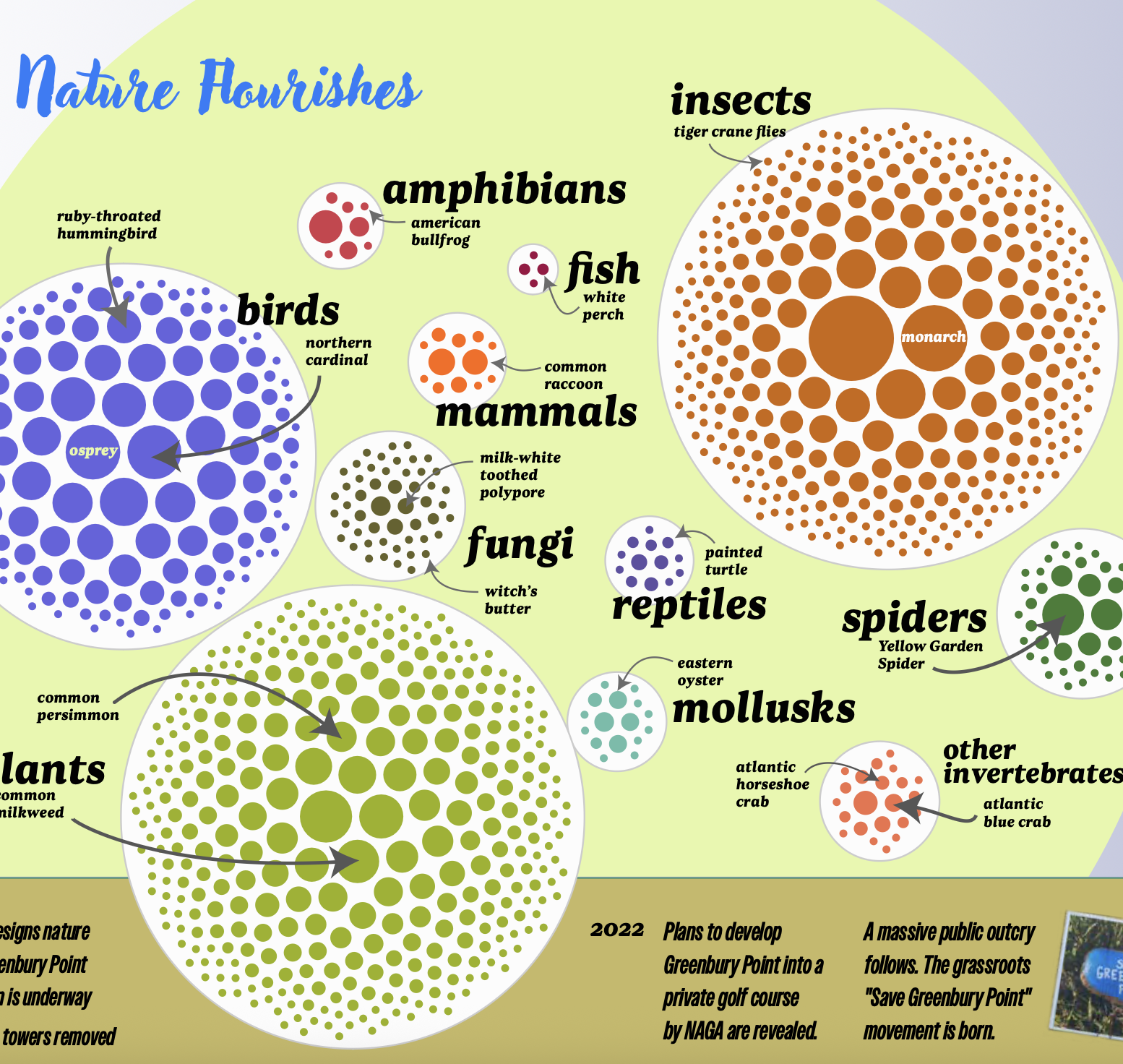
At the heart of the document is a species count chart compiled from iNaturalist records (2020–early 2025). It reveals:
- Over 1100 scientific classifications,
- 996 common species names,
- 316 taxon family names, and
- 817 individual species.
The report highlights representative species across taxonomic groups including:
- Birds like the northern cardinal and ruby-throated hummingbird,
- Fish such as white perch,
- Reptiles and amphibians including painted turtles and American bullfrogs,
- Invertebrates like the Atlantic blue crab and monarch butterfly,
- Plants and fungi like common milkweed and witch’s butter.
Each group is visualized with illustrations, and a bubble chart denotes the relative frequency of observations—providing a clear picture of the ecological richness of the area.
Overall, the report advocates for continued protection and public stewardship of Greenbury Point, emphasizing its irreplaceable value to biodiversity, community wellbeing, and the health of the Chesapeake Bay ecosystem.