Concerns, Goals and Objectives
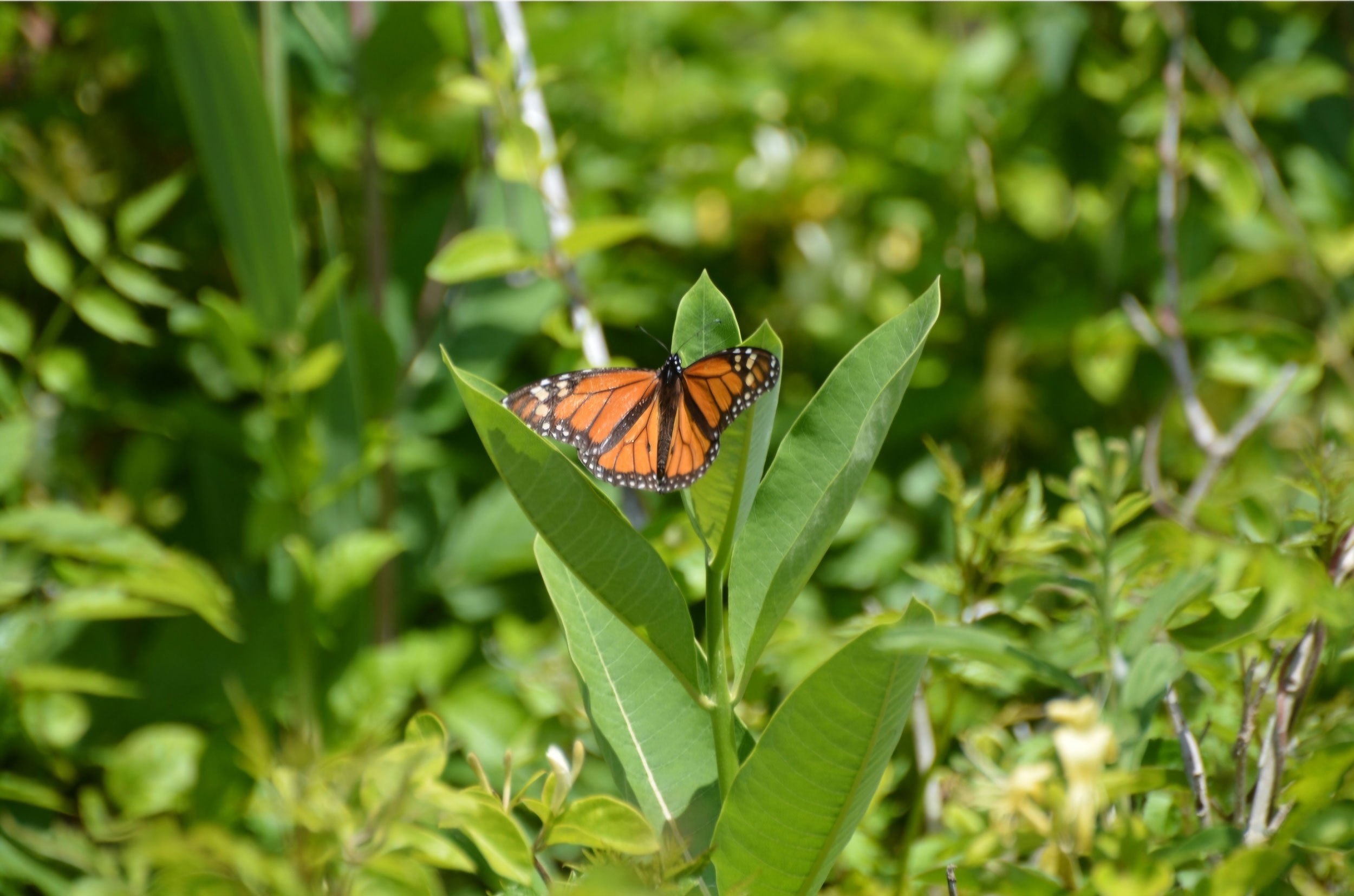
Photo by Jennifer Lockridge
Environmental Concerns
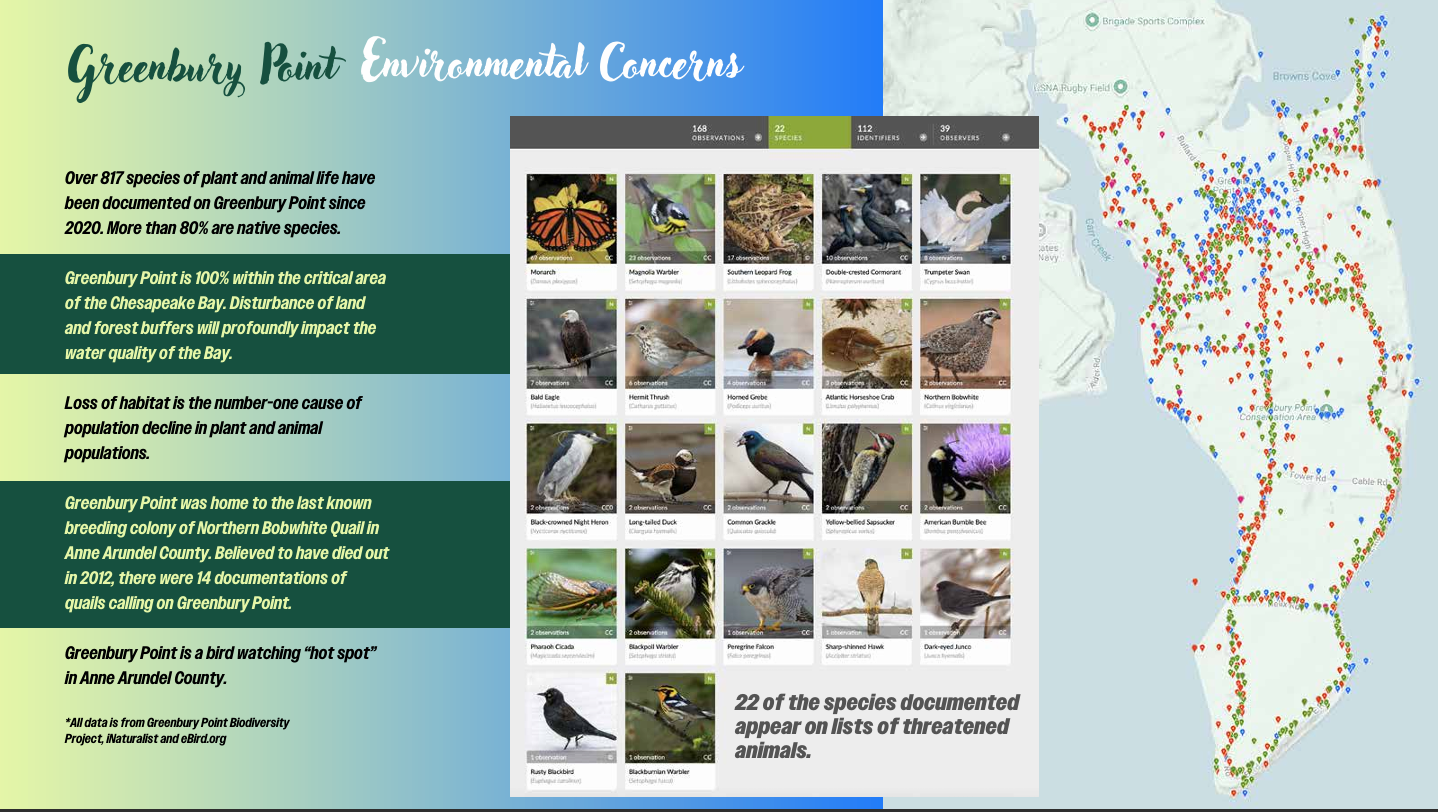
- Over 817 species of plant and animal life have been documented on Greenbury Point since 2020.
- More than 80% are native species.
- 22 of the species documented appear on lists of threatened animals.
- Greenbury Point is 100% within the critical area of the Chesapeake Bay.
- Disturbance of land and forest buffers will profoundly impact water quality in the Bay.
- Loss of habitat is the number-one cause of population decline in both plant and animal species.
- Greenbury Point was home to the last known breeding colony of Northern Bobwhite Quail in Anne Arundel County.
- Believed to have died out in 2012, there were 14 documentations of quails calling on Greenbury Point.
- Greenbury Point is a bird watching “hot spot” in Anne Arundel County.
All data is from Greenbury Point Biodiversity Project, iNaturalist, and eBird.org
The Threat:
Greenbury Point Conservation Area, a peninsula on the Chesapeake Bay, faces growing development pressure:
- In 2022, the Naval Academy Golf Association (NAGA) requested a sole source lease to build a second private golf course on Greenbury Point. Although Anne Arundel County submitted a competing request to preserve the land as a public park, cancelling both proposals, NAGA has continued to pursue the idea of a golf course on Greenbury Point Conservation Area.
- Additionally, the Navy has proposed an RV park on the edge of the conservation area—drawing strong opposition from environmental groups and local residents.
Our Vision: Stewardship through Partnership
The Friends of Greenbury Point advocate for a collaborative relationship with the U.S. Navy to protect this unique site through six core goals:
Historic Preservation
Protect and interpret Indigenous, colonial, and military history. Work to update National Register listing to reflect:
- Indigenous alliances and colonial treaties
- First European Settlement in Anne Arundel County which later moved across the Severn River to become Annapolis
- WWI–Cold War communications and naval aviation
Natural Resource Management
- Remove invasive vegetation and manage native habitats as per the current Integrated Natural Resources Management Plan (INRMP)
- Reinstate regular wildlife monitoring (birds, butterflies, herpetofauna, etc) with local agencies and citizen science efforts
- Remediate heavy metal contamination.
Climate Resilience
Implement urgent actions from the Naval Academy Resilience Plan:
- Continue implementing priority natural resources management and resiliency projects as per the current guiding documents
Public Access
- Guarantee permanent public shoreline trail access
- Close outdated rifle range and lift safety restrictions
Education & Interpretation
- Upgrade the Nature Center and restore birding platforms
- Add ADA-compliant trails and new interpretive signage
- Host public programs and conservation events
Community Engagement
- Establish a Navy–community stewardship model
- Launch and maintain a public volunteer corps for
- Trail maintenance, habitat restoration, citizen science
- Nature Center staffing and public education